


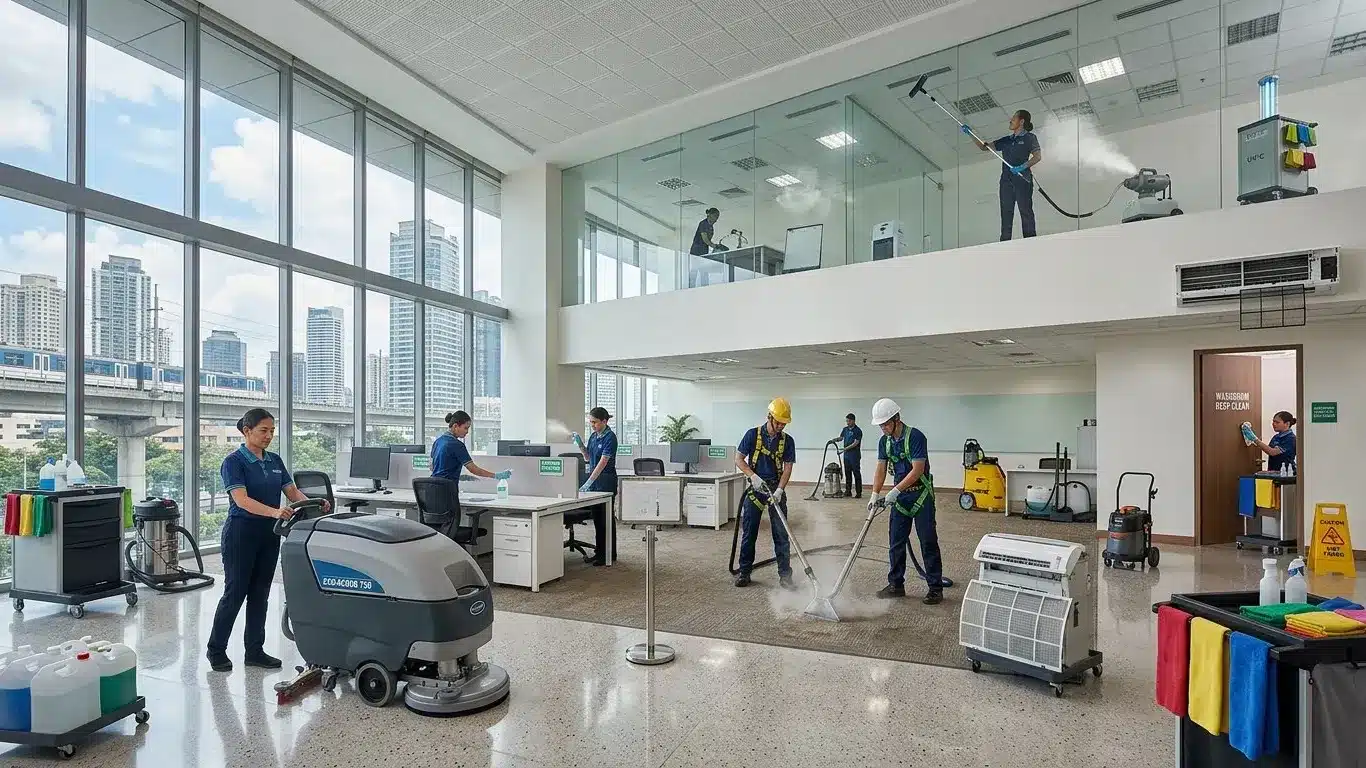
Daily janitorial routines keep trash emptied, floors swept, and surfaces clean. However, high-traffic workplaces accumulate invisible dirt, allergens, grease, and bacteria over time. Understanding how often commercial spaces need deep cleaning is essential. This is because standard daily care only handles surface dirt, leaving deep grime trapped in carpets, furniture, tile grout, and air vents.
The ideal deep cleaning schedule depends mostly on your industry, daily foot traffic, and overall layout. Therefore, working with our professional commercial cleaning services ensures your workspace stays compliant, sanitary, and welcoming to every client.
Recommended Commercial Deep Cleaning Schedule by Industry
When deciding how often commercial spaces need deep cleaning, facility managers should evaluate their specific industry standards and daily usage:
| Industry / Facility Type | Recommended Deep Cleaning Frequency | Primary Focus Areas |
|---|---|---|
| Medical & Dental Clinics | Monthly to Bi-monthly | Surface disinfection, air vent sanitization, floor stripping |
| Restaurants & Food Outlets | Monthly to Quarterly | Kitchen grease traps, appliance degreasing, tile grout, exhaust hoods |
| High-Traffic Offices | Quarterly (Every 3 Months) | Deep carpet washing, furniture cleaning, light fixtures, air vents |
| Retail Stores & Showrooms | Quarterly to Semi-Annually | High-touch glass, floor polishing, storage zones, entrance mats |
| Low-Traffic Offices | Semi-Annually (Every 6 Months) | Deep carpet washing, window blinds, exterior windows |
Key Factors That Determine Cleaning Schedules
- Daily Foot Traffic and OccupancyFacilities that welcome dozens of visitors daily need more frequent care. As a result, heavy foot traffic wears down flooring quickly and builds up moisture, dust, and germs.
- Flooring Types and FurnishingsWall-to-wall carpets and fabric chairs trap allergens and spills. Consequently, they require deep hot-water washing every three months. Meanwhile, hard surfaces like vinyl or tile need periodic stripping and sealing to protect their finish.
- Health Codes and RulesRestaurants, clinics, and schools must follow strict sanitation rules. Furthermore, falling behind on deep cleaning can cause safety violations, health risks, or lost business.
Signs Your Space Needs Immediate Deep Cleaning
If you are unsure about your cleaning schedule, look out for these clear warning signs:
- Persistent Odors: Stale or musty smells that linger even after daily mopping and trash removal.
- Visible Stains: Darkened carpet paths, dirty tile grout, or dusty air vents.
- More Sick Days: Frequent allergies or spreading illnesses often signal poor air quality and dirty surfaces.
- Dull Flooring: Floors that no longer shine, which means their protective wax layer is worn out.
Maintain a Healthier Workplace Year-Round
Waiting until dirt shows means bacteria and grime have already spread. However, setting a regular deep cleaning schedule protects your property, improves staff health, and makes a great impression on guests. For official safety tips, read the CDC Mold and Sanitation Guidelines.