


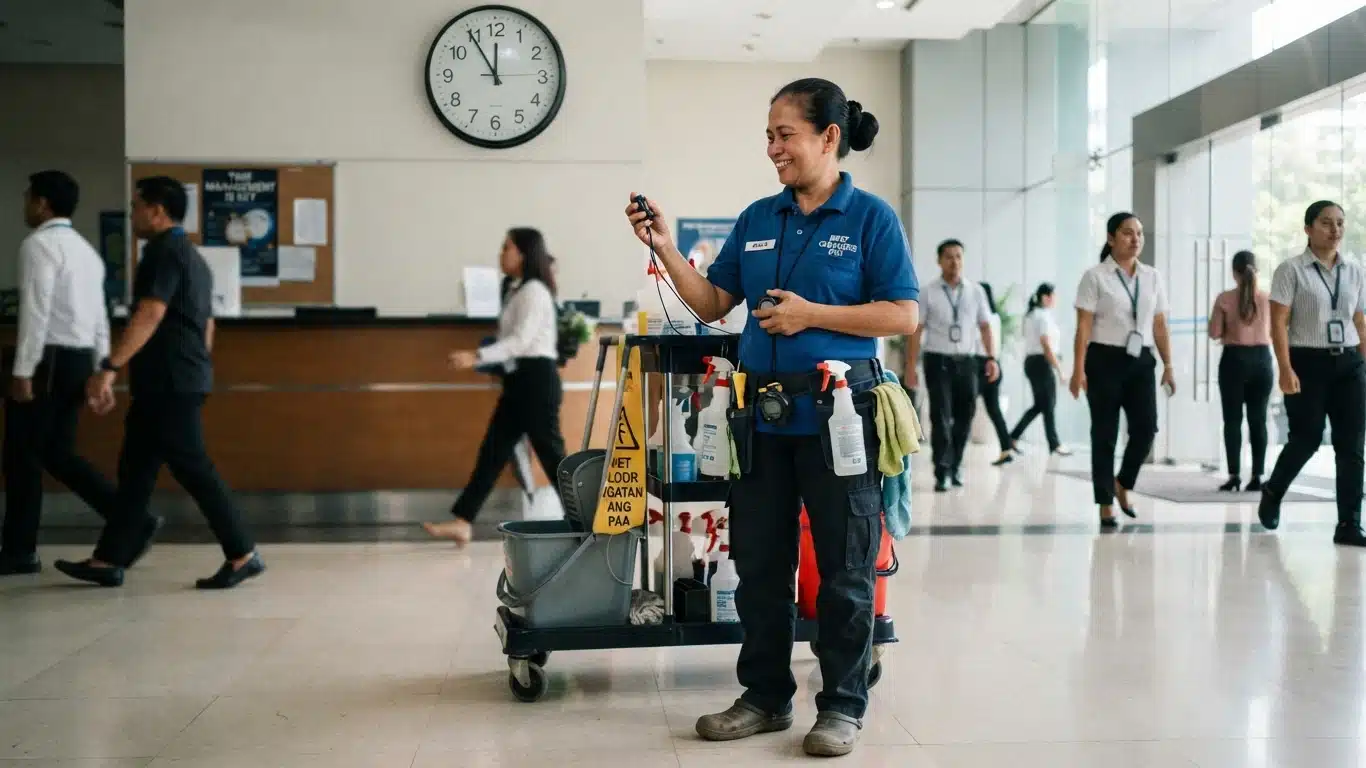
In a world where hybrid work is the norm, the 9-to-5 office schedule is officially a thing of the past. So why are so many companies still clinging to 9-to-5 cleaning routines?
For decades, commercial cleaning relied on fixed schedules: a crew arrived at the same time every night, wiping down every desk, emptying every trash bin, and mopping every floor—regardless of whether two people or two hundred people used the office that day.
Today, leading facilities are making the switch to Dynamic Cleaning (also known as demand-based cleaning). Here is why this shift is taking over modern corporate workplaces—and why your office should make the move, too.
What Is Dynamic Cleaning?
Unlike traditional fixed schedules, dynamic cleaning focuses resources where and when they are actually needed.
By utilizing occupancy sensors, digital foot-traffic counters, or flexible hybrid schedules, cleaning teams focus their efforts on heavily used zones—like active meeting rooms, high-traffic restrooms, and busy breakrooms—while skipping areas that went unused.
Why Modern Offices Are Making the Switch
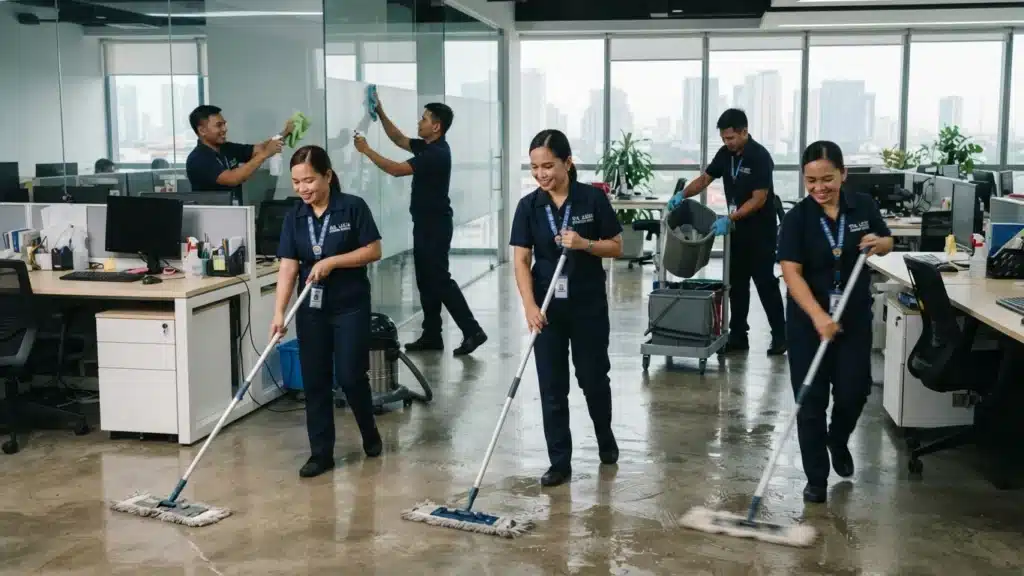
1. Smart Cost & Resource Allocation
Why pay to deep-clean an empty floor? Dynamic cleaning prevents wasted labor and supplies. By reallocating cleaning hours to high-traffic areas, companies maximize their facilities budget without sacrificing sanitation quality.
2. Higher Hygiene Standards Where It Matters
When cleaning teams aren’t forced to stick to a rigid checklist covering unused spaces, they can dedicate more time to high-touch points, deep sanitization, and meticulous care in areas employees actually touch and gather in daily.
3. Seamless Support for Hybrid Work
Hybrid offices experience unpredictable surges—a Tuesday might see peak attendance while a Friday is nearly empty. Dynamic cleaning naturally adapts to these fluctuating attendance patterns, ensuring the workspace stays spotless on busy days without over-servicing on quiet ones.
4. Eco-Friendly Operations
Fewer unnecessary cleaning rounds mean lower consumption of water, paper products, and cleaning chemicals. For businesses striving to hit corporate ESG (Environmental, Social, and Governance) targets, demand-based maintenance is an easy win for sustainability.
How to Get Started with Dynamic Cleaning
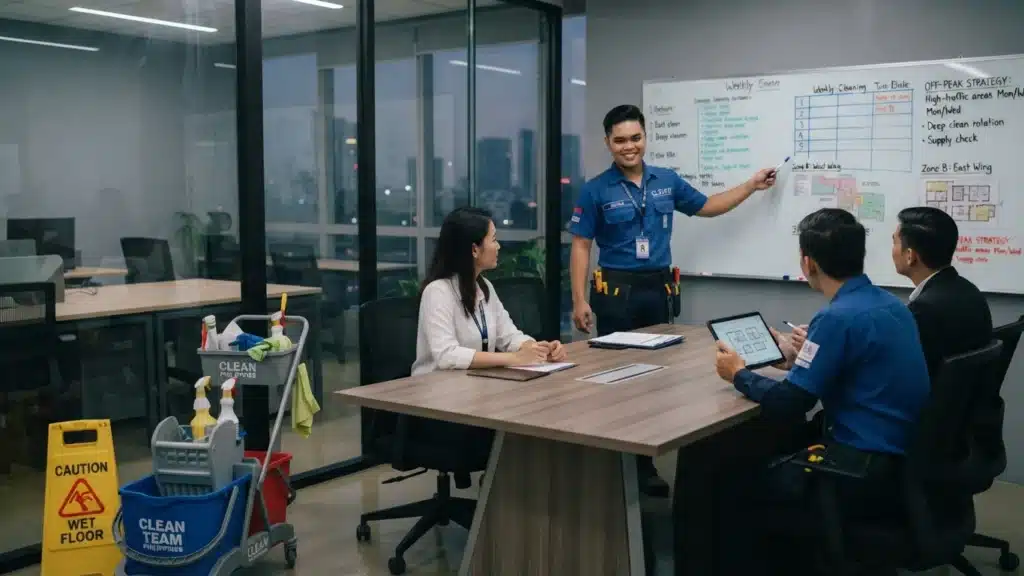
- Audit Your Office Usage: Identify peak days and high-traffic zones in your workspace.
- Leverage Basic Data: Even without complex IoT sensors, keycards or room-booking data can give your cleaning team a clear map of daily office activity.
- Partner with a Flexible Provider: Work with a commercial cleaning service that offers agile, performance-based contracts rather than rigid, static checklists.
The Bottom Line
Fixed cleaning schedules belong to a fixed workplace model. Modern, agile offices require modern, flexible care. By switching to dynamic cleaning, facility managers can lower costs, reduce environmental impact, and maintain a healthier, happier workplace.
Ready to elevate your facility’s hygiene and operational efficiency?
Partner with Happy Housekeepers for tailored commercial cleaning and preventive maintenance solutions. We help corporate offices, commercial facilities, and warehouses maintain pristine, safe, and high-performing environments year-round.